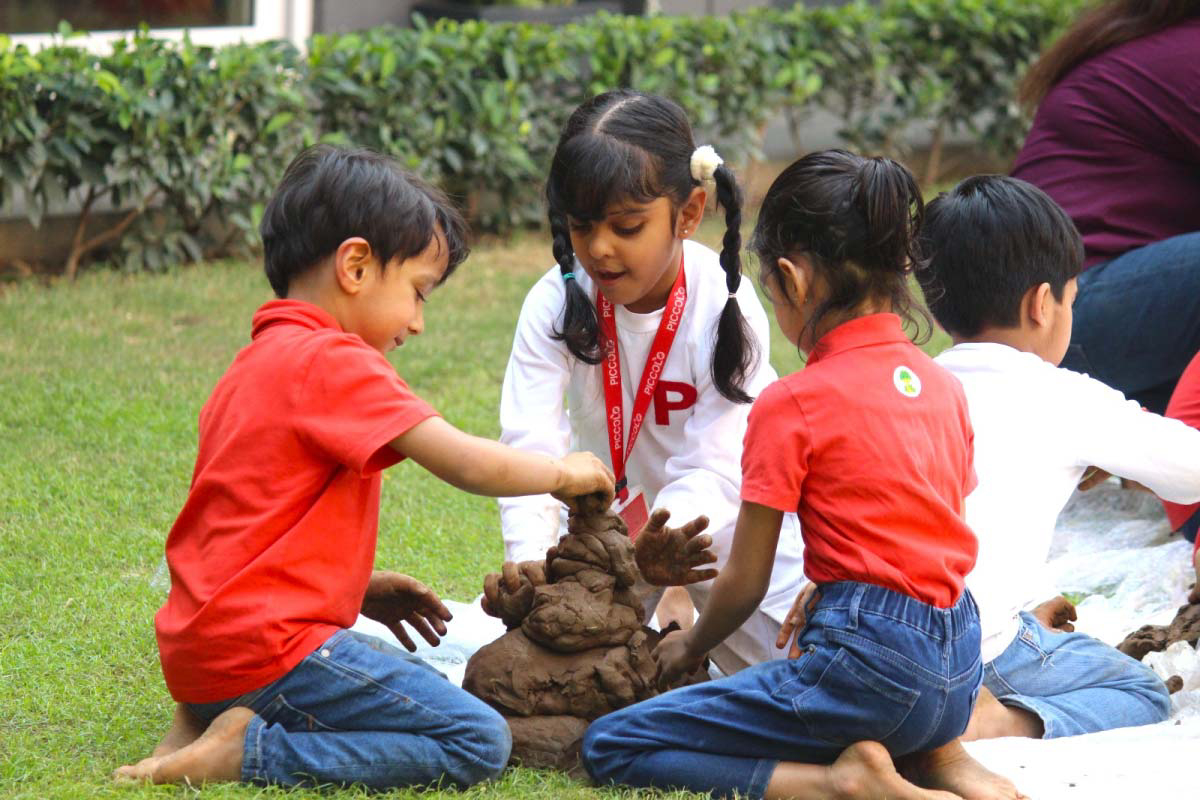
Reading Time: 5 Minutes
Published on: 22 April, 2026
The Montessori Way, a century old approach, that is changing lives even today.
Imagine an approach that serves more than 1 million students today in the US. A practice so efficient that it has been there since the early 20th century. But what is so powerful about this approach? Let us understand that through the words of Maria Montessori.
What exactly is the Montessori Approach ?
“The greatest gifts we can give our children are the roots of responsibility & wings of independence.” When a child is given an environment where he feels a sense of independence, a freedom of choice, then the results are based on his own ideas and thoughts, not on a set curriculum, and that is what Montessori is all about. Learning at an independent pace with a hand of trust above their heads.
Early childhood education matters much more than one can imagine; it lays the foundation of an individual, helping develop skills that help at age 6 and at age 36. With a blend of Montessori, early childhood education feels more like exploring every aspect of life at our own pace, acting as a major booster of creativity.
Why Montessori, and Why does Maria’s work still matter ?
But Why Montessori? Because of the person who has laid the foundation for this child-centric approach. Meet Maria Montessori, a physician from Italy, who was sent to work with children that we labeled as “unteachable” and “hopeless.” At that moment, she didn’t see children as “defective,” but as being in an environment that wasn’t right for them.
She spent years working and experimenting along with these children in various settings, designing materials with her own hands, and kept writing what worked and what didn’t, and there came a moment when her children were sitting in the same room with others for state reading exams. The moment that marked the beginning of Maria Montessori and her approach towards early childhood education.
“Never help a child with a task at which he feels he can succeed.” This is something that Maria truly believed. As she said, “I didn’t give children a method of education; I simply gave them a chance to live,” and that is exactly what a child wants. Right environment, freedom, and a chance to try, and you’ll be amazed at what a curious soul can achieve. And all in all, this is what Piccolo aims for.
Rethinking what a “good classroom” really looks like
Let’s understand what actually differentiated the Montessori approach of learning from the traditional early childhood education approach.
Myth: A Quiet Classroom Means Better Learning!
Here is why, purposeful movement and conversations are where real learning happens.
Many parents believe a quiet class with pin-drop silence is something that makes a child sit, stay, and learn, because that’s what we’ve been taught since ages ago, but in a Montessori classroom, the purposeful movements and children having a conversation are where the learning actually takes place. When a child experiences freedom of speech as a right, not as a reward, that is when a child actually learns.
Myth: Montessori Is Just Free Play.
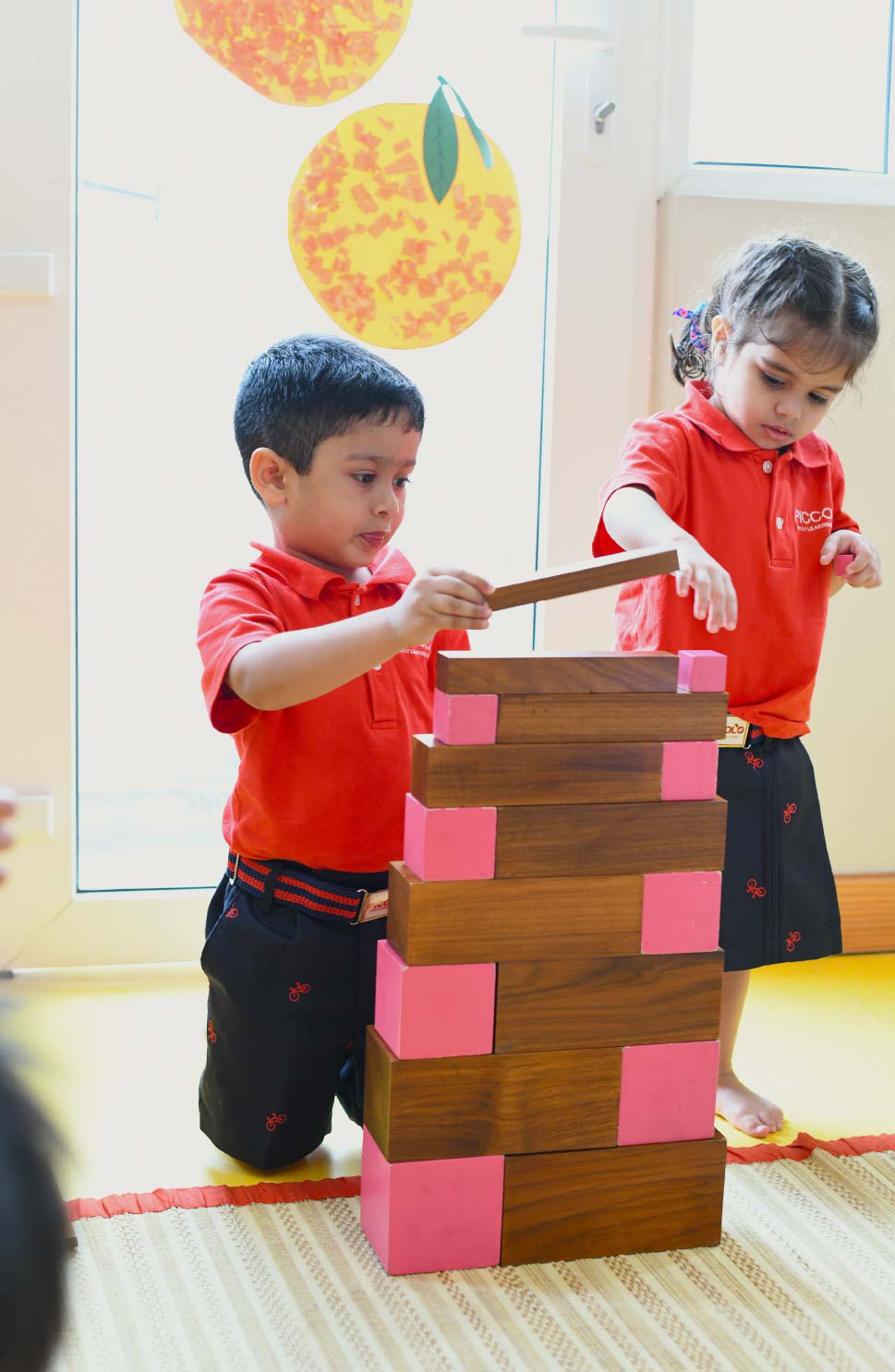
Impact of providing freedom within a designed environment, where each activity and material serve a purpose.
Parents think the Montessori way is just free play, kids doing whatever they feel like with no real learning happening. But in reality, children are choosing their activities freely. Each activity is prepared with materials that have purpose, which in turn leads to purposeful learning. The freedom among children comes through a carefully designed environment.
Myth: Children need constant help.
The hidden power of productive struggle.
One of the core principles of Maria’s approach is “Help me do it myself”, not “do it for me”, not “ I give up”, but I’ll do it myself. The majority of parents step in before a child even starts struggling, but in the Montessori approach, that struggle is learning. When one way doesn’t work out, the child’s mind thinks of various other approaches that not only help them in building their sensory skills but also improve problem-solving skills. So instead of “Wait, let me help you,” help them to do it themselves.
The power of prepared environment
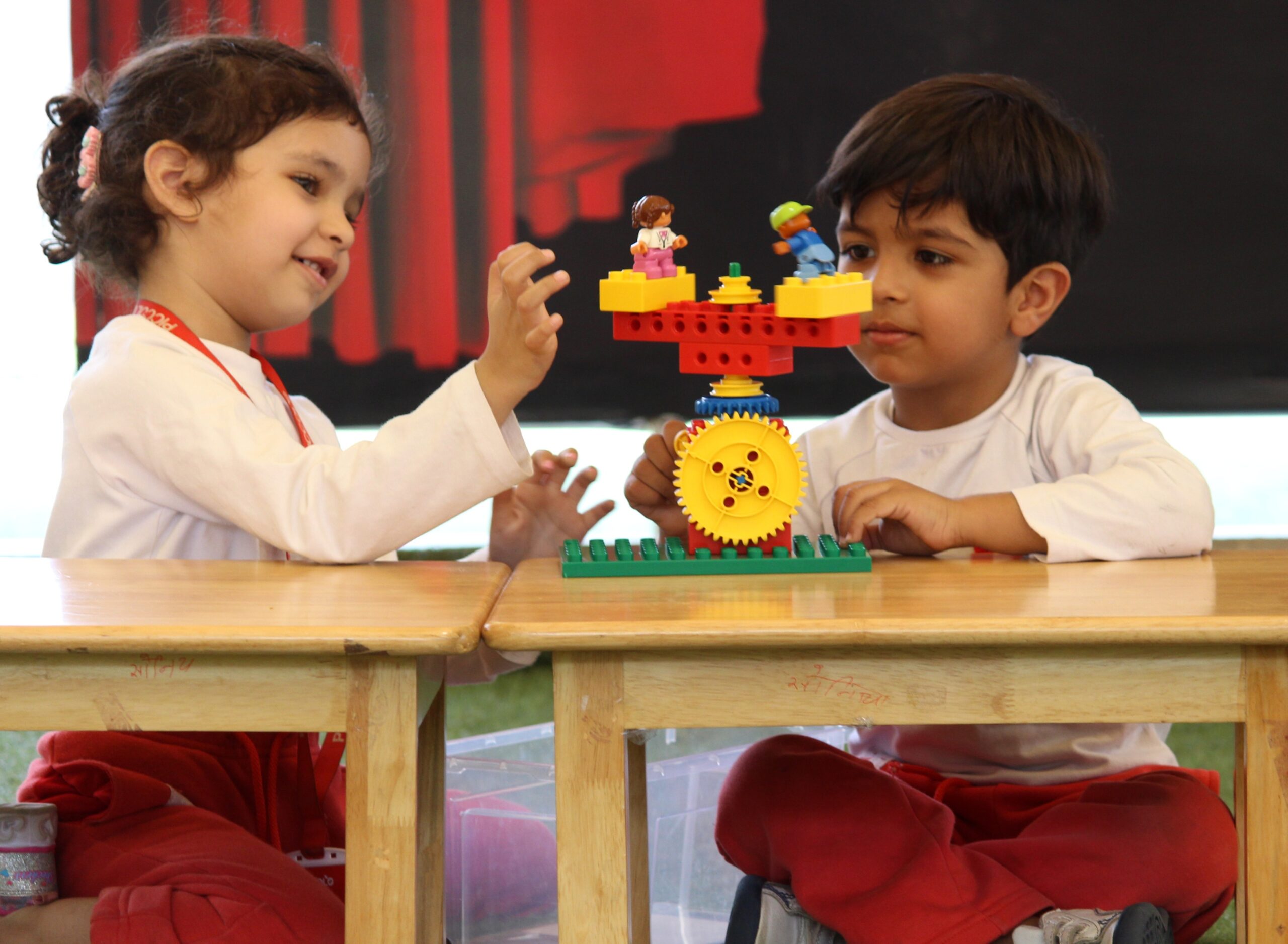
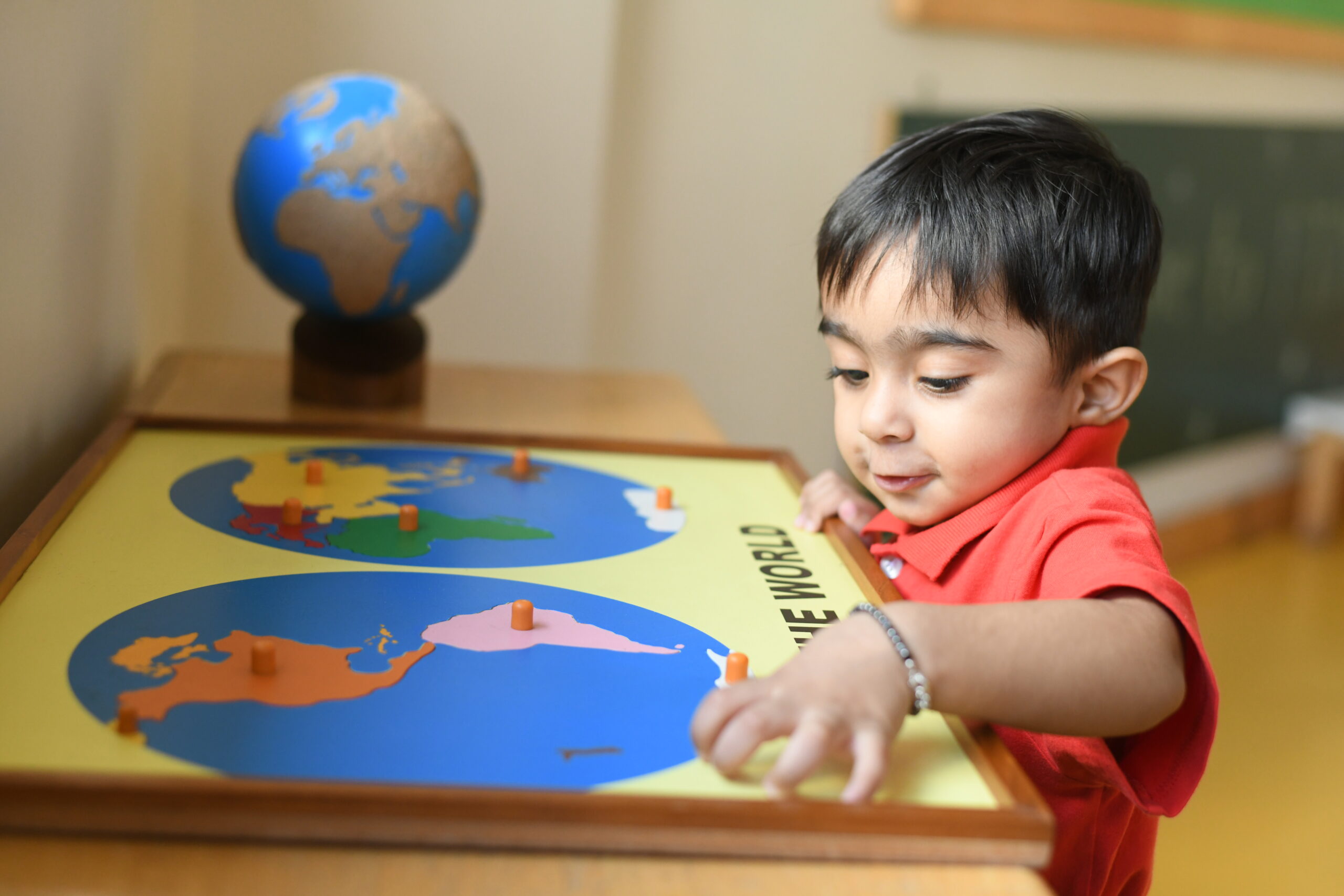
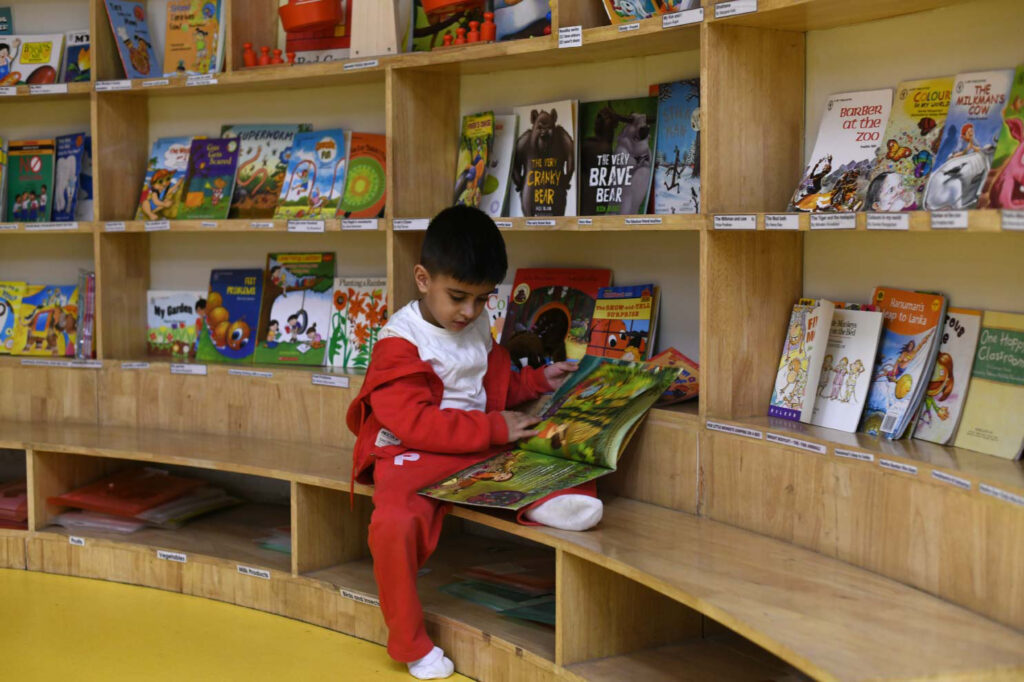
When a child is given a prepared environment, they do not feel pressured to learn; at that moment, they love to learn. A right environment is something that lays the foundation of many positive habits, and that is why a “prepared environment” is one of the core principles of the Montessori approach. And a tidy class does not individually define a right environment, but materials placed at their eye level, the right type of furniture, detailing, order, and so much more play a crucial role in preparing for an environment, and at Piccolo, each and every classroom is made with this core principle in mind.
Impact of Child-Led learning
Another core approach that Piccolo follows from the books of Montessori ways of learning is child-led learning. The child pursues what they want to learn instead of a fixed schedule or timetable; this way, they do what they actually want to with their whole hearts. Even as an adult, when we are forced to read or learn about something we are not interested in, it feels like so much pressure, but when there’s a favorite book or movie we’re interested in, time flies.Reason behind it is we dwell in process, because that is what we wanted to pursue, not because someone forced us into it. When a child pursues something that they really want to, then their brain develops better, they build real confidence, and creativity stays alive.
All of the above approaches are only possible when a child has a trusted guide having their back, not a teacher, but a guide.
Importance of a Guide
When a teacher acts as a guide, the child stops performing, even better, they start learning. A guide is someone who lets the child work out on their own and intervenes only when it’s required. Someone who observes, sets the right environment for them, and helps them out when support is required. Without someone standing on their shoulder waiting to correct them, children often do some remarkable work; they start learning themselves.
Instead of gifts or stickers, Montessori guides use gentle directions that make children want to do the right thing not because they’ll be rewarded afterwards but because they feel it’s the right thing to do. This helps in building self-discipline inside and out.
But why did Piccolo choose Montessori?
Piccolo chose Montessori because it felt like the right thing for a child. Our main goal was to make children want to learn because they really wanted to, not because they were pressured to.
Imagine two children are learning to read.
Child A is drilled with flashcards and repetitive corrections; someone corrects each and every time a word is mispronounced, creating that tight feeling hovering over the will to learn.
And then there is Child B, who is given a shelf of books, displayed at their height, and open space. She read the stories aloud, not because someone was correcting but because she was given a right to learn on her own.
Nobody told child B when to arrive; she arrived, simply on her own.
And that approach with Child B is what makes Piccolo a Montessori early learning center.