
Reading Time: 5 Minutes
Date: 19 May, 2026
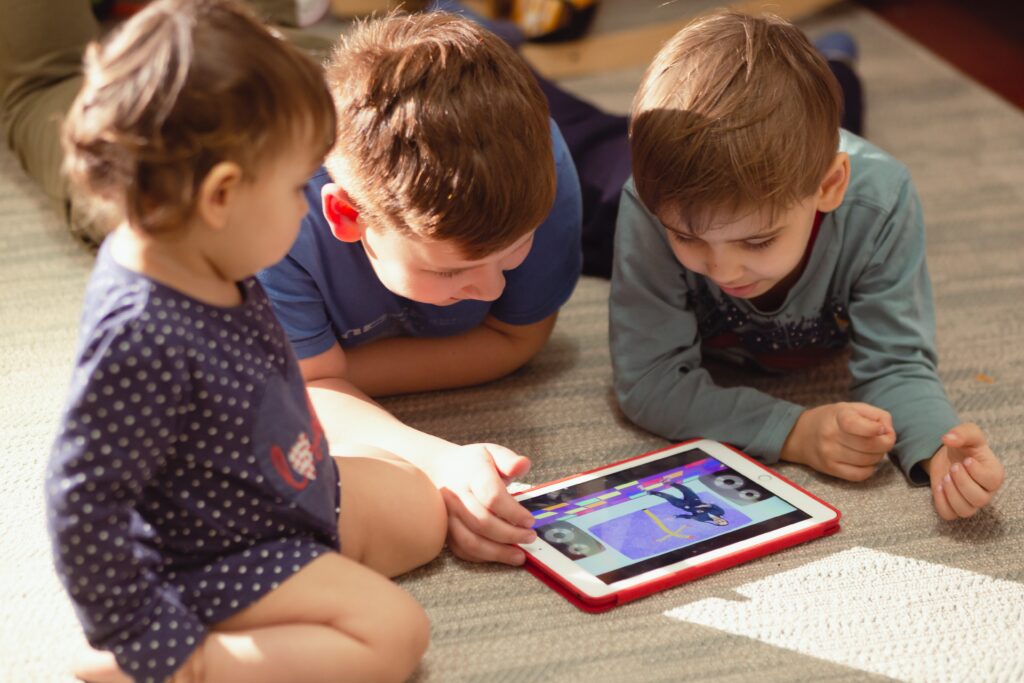
They start crying as loud as possible, screaming as if there’s nothing that could fix this now, thumping on the floor as if this is their worst day possible, but the moment you hand them their screens back, the room goes into the whim of silence; you could hear a pin drop at that moment. And now, they don’t notice the world around them, all they need are the bright colors highlighting out of the screen. The sound that keeps them focused, the visuals that keep them hooked. Does this scenario seem a bit familiar to you? Does your child also swallow that next bite of food only if there is a screen in front of them? And all of this does make things work, but there is a guilt deep down that makes you feel like you’re failing? Don’t worry, it’s not your fault, it’s science. Everything is science, and this problem definitely has a solution to it.
Let’s dive deep down and work together about this not-so-discussed but crucial problem that young parents face on almost a daily basis.
This isn’t bad behavior, it’s a signal.
Kids are not screaming out because they hate you, it’s all because of that dopamine crash that takes place within them. Let’s understand it the scientific way.
You gave your child a screen for a little amount of time, the screen triggers the dopamine release, also known as the “feel good” chemical of the body. Each visual, each sound keeps them hooked, and their brain starts expecting a hit at every other frame of the screen, but the moment you take back their screens, the dopamine drops suddenly, the crash, well-known as the “meltdown,” takes place.
But then why are such loud reactions seen? That is because right now, your child’s prefrontal cortex (the part of the brain that helps in managing impulses and regulates emotions) is not developed fully, it develops fully by the age of 25. So right now, your kid does not have the tools to handle this crash down, which gradually leads to their loud meltdown.
If the kid spends more hours in front of the screen, their baseline dopamine levels start shifting, and gradually their mind requires more screen time to feel normal. That’s why the screams get louder over time, not quieter, the dependency deepens.
And the tantrums, that parents feel, is actually their nervous system being dysregulated. The body goes into a mild stress response, the cortisol increases, the heart rate rises, and their actions seem inconsolable. It’s not behavioral, it’s actually physiological.
The hard truth.
Now just take a moment and remember the first time you gave your child a screen for, let’s say, a little amount of time. What if, at that moment, the screen was not provided to the kid? What else could have happened? Let’s give a look at a few things that the screen replaced.
Imaginative Playing
When a child is bored, their curious mind starts finding ways to create something of their own. They create their own worlds, invent their own games, talk to themselves, and understand objects and moments on their own, all of this helps in generating cognitive skills. But the moment they are handed over screens, they don’t have to put in the struggle on their own imaginations, they get a pre-built world.
Frustration Tolerance
The moments the child gets a little annoyed or frustrated because of not understanding a specific moment or a word, and if in the next moment a screen is placed in front of them, they forget, they forget all of it, and in that moment they miss an opportunity of learning a lesson. Next time, they don’t tolerate their frustration, instead, they look for a screen every time they are faced with a difficult situation.
Parent Connection
The screen starts becoming a co-regulator of emotions for the child, and gradually it leads to fewer parent-child co-play moments and less eye contact, which leads to the child finding calm through screen simulations instead of having an emotional connection with their parent.
The Magic of Doing Nothing
Stillness is where creativity lies,staring into the ceiling, sitting with nothing is what makes the mind generate more ideas, more solutions to problems. But screens have turned the feeling of being still unbearable.
And none of this makes you a bad parent. It makes you human, finding and doing what felt right in that specific moment. Instead of looking out at what screen’s replaced lets move towards something we can work on.
What to do instead, starting today
Now that we have a clear picture in front of us, let’s look for some solutions, something that can day by day, moment by moment, slowly rebuild what the screen has replaced. You don’t need to throw the screens away. You just need to show your child’s brain that it can survive without them. Let’s go through the science behind each method, understanding why this works.
The 5-minute warning
The screen triggers a dopamine release, which keeps the child hooked and absorbed, and a sudden taking away of the screen sends them into a meltdown state, so a 5-minute warning gives the child’s nervous system some time to prepare for the transition and helps them give reassurance.
Work on the transition ritual before, not after
After the crashdown takes place, the child’s mind gets dysregulated, and it gets tougher to console them. But a preplanned walk, a snack ready for them, and an outdoor game waiting provide their minds with something to look forward to and not focus on losing something.
Sitting in Discomfort
Let them sit in discomfort. Every time you sit with them throughout their meltdown without handing over the screen back, you make their nervous system believe that this is manageable, this discomfort is survivable. You become a co-regulator of their emotions instead of the screen.
The first week
The brain is like clay, it adapts with time. The first week seems tougher but is the most crucial. By the second week the baseline starts to shift back, the nervous system now needs short screen time, the transition seems easier, and the changes? They’re genuinely noticeable.
Most parents don’t get this information, they don’t read it till this far. They’re just expected to handle their child’s meltdown in a world full of screens, but if you made it till this far, it means you are aware, you already care more than enough. You saw something uncomfortable and chose to not look away but instead tried to find a solution and get to the root cause of the problem.
Nobody told you about dopamine and what the screen is actually replacing, so you did what you thought fit best with your little one. But now you know, and that changes everything. You don’t have to be a different parent. You just have to start a little differently tomorrow.
If this blog felt like having a conversation you’ve been wanting to have, then this space is for you.
We’ll see you in our next one. Thank you for reading.