Reading Time: 4-5 Minutes
Publishing Date: 29 October, 2026
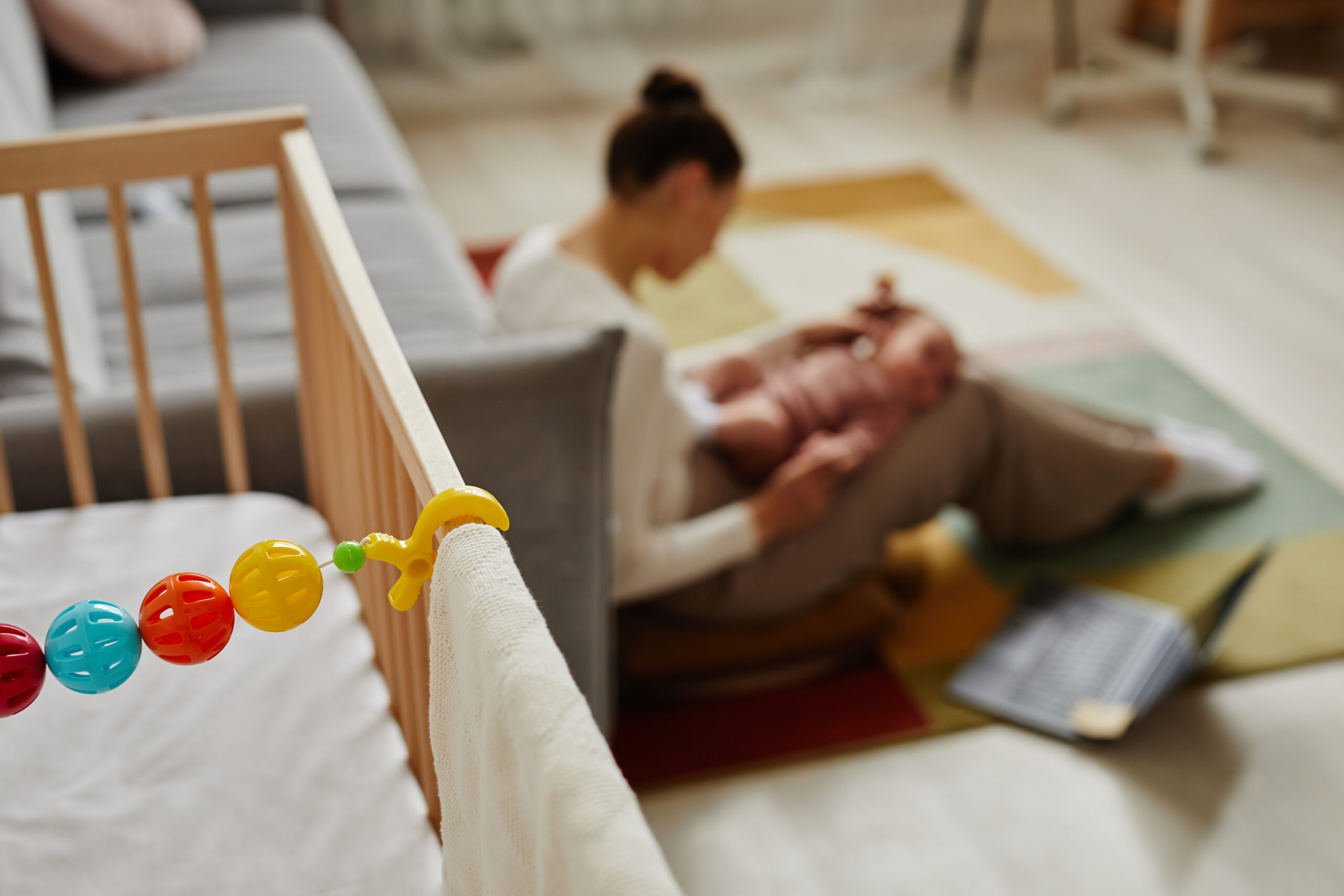
It’s the night before the office; there’s an important presentation for you to complete. You take your laptop and start working and, in the process, you hand your child their favourite toy so that you can finish your task as soon as possible. But minutes later, they’re back besides you, reaching for whatever you’re doing. You offer them another toy, hoping it’ll keep them occupied, but somehow they’re always drawn back to you.
And honestly there’s nothing wrong with that, sometimes you have deadlines to meet and calls to attend which you can’t wait until your child is ready to play independently. In those moments, offering a toy, a book or any activity can be a perfectly reasonable way to buy yourself a little time.
If you’re raising a child between the age of 3 to 6, you’ve probably experienced this more often than you’d like. The more you try to keep them occupied while you finish something, the more they seems to want to be involved in what you’re doing.
Why does distraction work, and why it doesn’t last?
Your child gets occupied, you get a few uninterrupted minutes, and you manage to get something done. The problem isn’t that distraction doesn’t work. It’s that its effects are often temporary.
Distraction can help you get through the moment, but it doesn’t always address what brought your child to you in the first place.
You’ve probably noticed the pattern: the toy that held their attention a few minutes ago is suddenly forgotten. This doesn’t mean that the distraction failed, it did what it was supposed to. It did redirect their attention and direction, but if your child was curious about what you were doing, eager to imitate you, or simply looking for a way to participate, then it is bigger than distraction; they are trying to find ways to be involved.
Distraction manages the moment, involvement gives your child a chance to be a part of it.
Why does distraction work, and why it doesn’t last?
Have you noticed how your little one always wants to do the same thing that you’re doing?
Children have a natural desire to imitate, explore and try things for themselves. As their abilities grow, so does their desire to use them.
That’s where the “I’ll do it” comes in.
When your child insists on putting on their own shoes or wants to help you do some chores, they’re not necessarily trying to challenge your authority or disturb you. They’re practising independence and testing what they’re capable of doing.
And children learn a great deal with these hands-on experiences. They learn it by attempting tasks, making small adjustments and seeing the results of their efforts.
This is one of the core ideas of Montessori education: “Help me do it myself.” Children are capable learners who benefit from meaningful participation around their surroundings.
Of course, a child still needs guidance and supervision, but when they showcase their interest in what you’re doing, it may be worth asking, “How can you involve them in one of your tasks, or is there a safe way for them to participate?”
Because sometimes, the most meaningful activity isn’t something you bring out for your toddler, it’s something you invite them to be a part of.
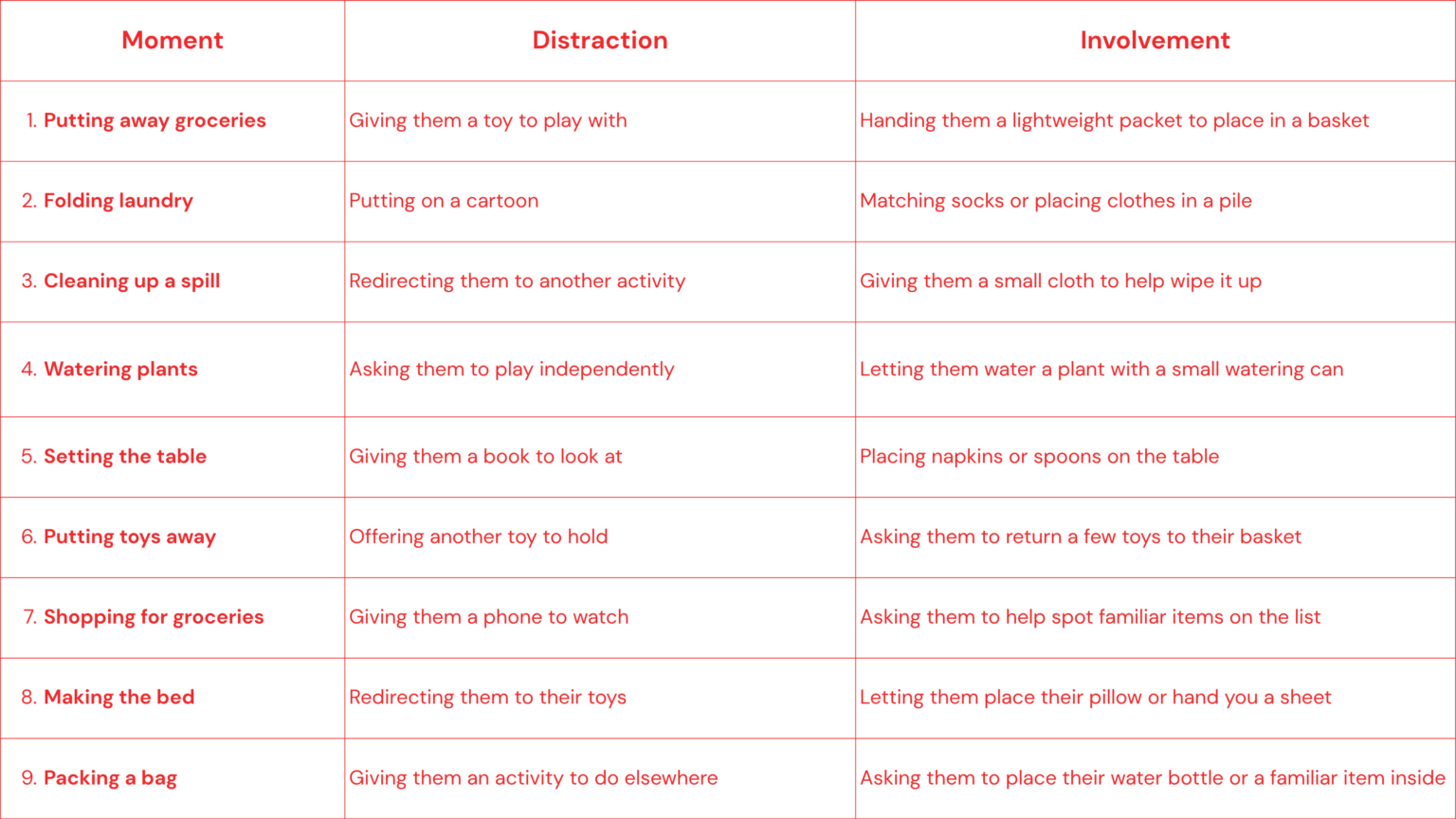
Distraction vs involvement: what it looks like in real life.
What involvement does that distraction not?
There’s a difference between giving your child something to do and giving them a role in what you’re doing.
When a child participates in everyday tasks, they get opportunities to practise their focusing skills, repeating actions and solving their own little problems at their own pace. They’re not just being busy, they’re actively participating and exploring what they can do.
Being involved can also give children a sense of independence. When you let them try putting away their toys, cleaning a small spill and doing little activities like these, you’re letting them make choices, giving them room to do a task on their own and letting them experience a sense of satisfaction from doing something themselves on their own. And the moment they hear “You did it”, they begin to build a belief in their own abilities.
Not only that, but working alongside your child gives you an opportunity to connect with them, know them better and help them feel included in your everyday world.
Also note that involvement won’t prevent every meltdown or make every task easier. But it can help in offering something that distraction cannot, the opportunity to feel capable, connected and genuinely a part of what is happening around them.
“But I don’t have time for this.”
Let’s be honest, involving your child in everyday tasks can take longer, especially in the beginning. It’s quicker to put on their shoes yourselves, or it’s easier to finish folding laundry on your own. And when you’re already juggling work, household responsibilities and dozens of other things, adding more time for a task can feel impossible.
But involvement doesn’t mean you’re making your everyday routine longer than it actually is. Giving your child little activities and small opportunities to participate can help them practise independence and help them reduce frustrations that come in when you ask them to wait or try to distract them with something.
You don’t have to do this every day, start with just one routine. Start with letting them put their shoes away, carrying and placing small objects, and helping them put toys on their own. Some days you can make some time, and some days you won’t be able to, both are okay.
The main aim isn’t to make every moment a learning opportunity. It’s to make a little more room for participation when you can.
Start small: A 3-step way in.
You don’t need to change your entire routine to involve your child more. Start with one small moment.
- Pick one routine: Choose something you already do every day, like tidying toys, getting dressed or bath time.
- Give them a real task: Let them put their clothes in a basket, carry their towel, etc. Keep it simple and safe for their age.
- Step back and let them try: It might take longer, look a little messy, or need a helping hand. That’s okay, the goal isn’t perfection, it’s participation.
You don’t have to get it right every time. Just start by making a little room for your toddler to be a part of everyday life.
The next time your child insists on doing something themselves or wants to be a part of whatever you’re doing, try looking at that moment a little differently. You don’t have to turn every task into a learning opportunity or make room for them every single time. Sometimes, simply letting them try is enough.
Because children don’t just need things to keep them occupied. They need opportunities to explore, participate, contribute and discover what they’re capable of.
When we stop trying to keep little hands busy and start giving them a purpose, we make room for little minds to grow.
Thank you for reading, we’ll see you in the next one.