Reading Time: 4-5 Minutes
Published on: 7 September, 2026
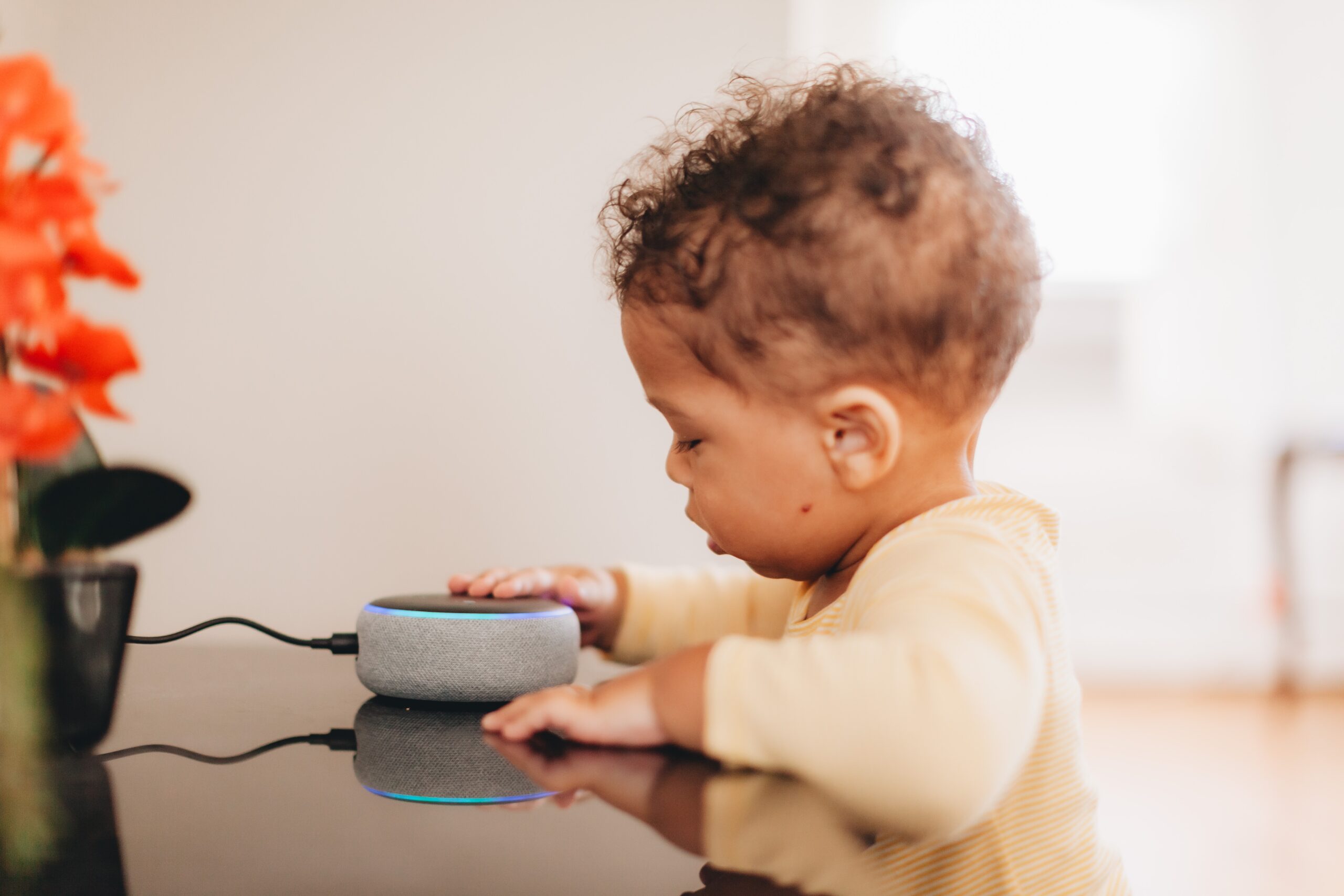
Your toddler is trying to have a conversation with a speaker exactly in a way they communicate with you, or notice that one toy is lighting up whenever your toddler says a word. You don’t say it out loud, but there’s a sense of quite uneasiness to observe your child interact with a machine, not because it is something dangerous, but because it is pointing to something real.
The question that parents today are asking isn’t exactly, “Is AI bad for my child?” It actually directs, “Is this the new normal now? Is it actually okay?”‘
Because it isn’t just software on a computer; it is actually responding and interacting with your little one, and that’s where it’s important to think about it more clearly.
The goal isn’t to decide whether AI should be a part of their childhood, it is to understand what happens when technology becomes a part of their day and when it is important to draw thoughtful boundaries.
So before we talk about screen time, safety, or what parents should do, let’s discuss if AI actually helps a toddler learn or not.
Does AI Actually Help Toddlers Learn?
Right now there’s not good evidence that directly says that introducing AI to toddlers gives them an academic advantage. Research on AI, specifically for children under age 3, is still limited. But what we have strongly observed about young children and digital media is that an engaged adult is a far more powerful learning partner a child can have than a digital screen.
There’s a reason for this, young children are still developing the ability to connect what happens on a screen with the three-dimensional world they are living in. Researchers commonly call this “video deficit,” the difficulty that infants and young toddlers can have in transferring information from a digital representation into real-life understanding.
The American Academy of Pediatrics notes that the children under the age of two learn less effectively from digital media than they can from the interactions of their caregivers.
AI makes the experience feel much more sophisticated because it can answer back, adapt its responses, and understand a child’s question, but being responsive does not mean being developmentally responsive. A parent who stays and asks, “What happened? “Why do you think that happened?” follows a toddler’s curiosity, gives explanations based on the child’s real word experiences, and is much richer than just providing an adapted answer.
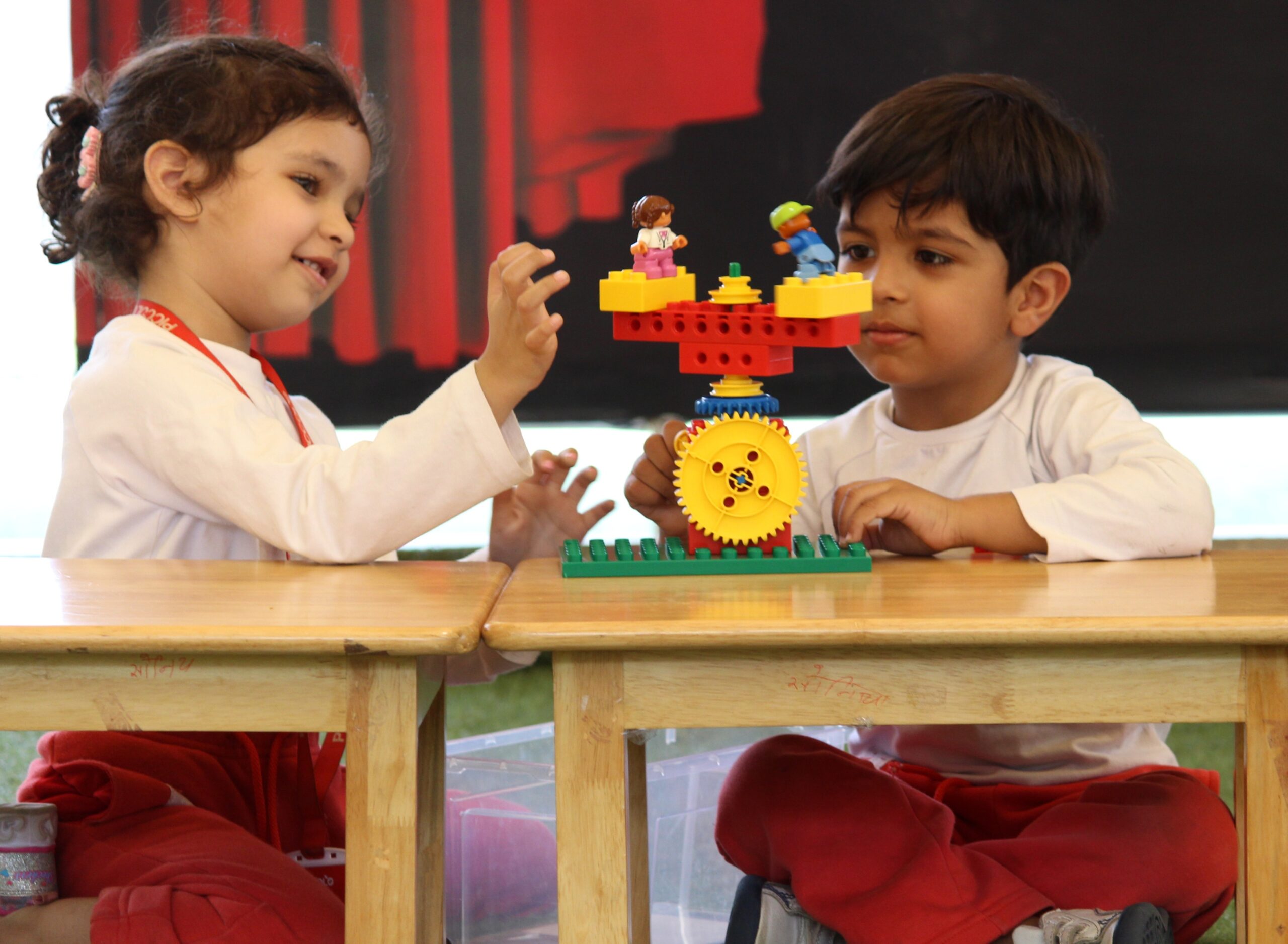
But that doesn’t mean AI has no place in early childhood. Carefully designed digital tools can benefit under the supervision of an adult, but for toddlers the biggest learning opportunities are still low-tech: a conversation, a story read-together, building blocks, singing songs, pretending, exploring, and so much more.
Similarly, WHO guidance emphasizes active play and caregiver-supported reading and storytelling for young children, rather than replacing these experiences with sedentary screen time.

The Real Risk Isn’t the Screen, It’s What Gets Replaced.
A toddler asking a voice assistant a question is not necessarily a problem and is not missing out on something, but if they keep turning to that for stories, answers, reassurances, or simply someone to talk to, then it is worth noticing what is happening in those moments.
Early childhood heavily depends on “serve and return,” a child making a sound, gesture, or attempt to communicate and an adult responding to it. This back and forth helps in building the foundations for language, social skills, and healthy development.
Young children are naturally inclined to treat responsiveness as social; UNICEF specifically highlights concerns about children forming attachments to AI systems and the possibility that these interactions could displace important human interaction.
So if your child laughs with an AI toy, talks to a voice assistant, or asks it endless questions, you don’t need to worry that they are somehow choosing a machine over you. The thing to watch is the balance.
What to Actually Watch For
To protect children from the risks of using AI, parents should actively monitor how AI tools interact with their children and look for the following safety features when evaluating:
No data-sharing defaults: Keep a check if the app shares child data with a third-party app.
Strict parental controls: Ensure that the platform requires parent verification before it asks for creating an account.
Biometric Encryption: Look for tools that encrypt voice and facial recognition data locally on the device rather than uploading on the cloud servers.
Age-appropriate content filtering: Verify that AI cannot generate explicit, violent, and mature content.
Clearly marked AI content: Teaching children on how to look for watermarks and labels, indicating that the media is AI generated.
Report and block functions: Ensure the app provides an easily accessible way to report and block harmful AI outputs.
Healthy usage limits: Keep a lookout for in-built session limits to prevent doom scrolling.
The question isn’t whether AI belongs in your little one’s childhood, it probably will. For today’s toddler, AI is just something they will grow up in. What matters the most is what role it’ll play. A smart AI assistant answers a question, but it cannot replace the impact of what a human conversation can follow. A responsive machine can imitate back and forth, but it can’t take the place of a human relationship. So perhaps the healthiest approach might not be “AI or not AI,” but “AI in its place.” Let it work as a tool, an occasional source of curiosity, but keep people, play, and active human experiences at the center of it all.
Thank you for reading, we’ll see you in the next one.