Reading Time: 5-6 Minutes
Date: 4 Aug, 2026
“Just one bite.”
No
“Please.”
Mobile
“You can take it after you finish your food.”
No
“One Bite”
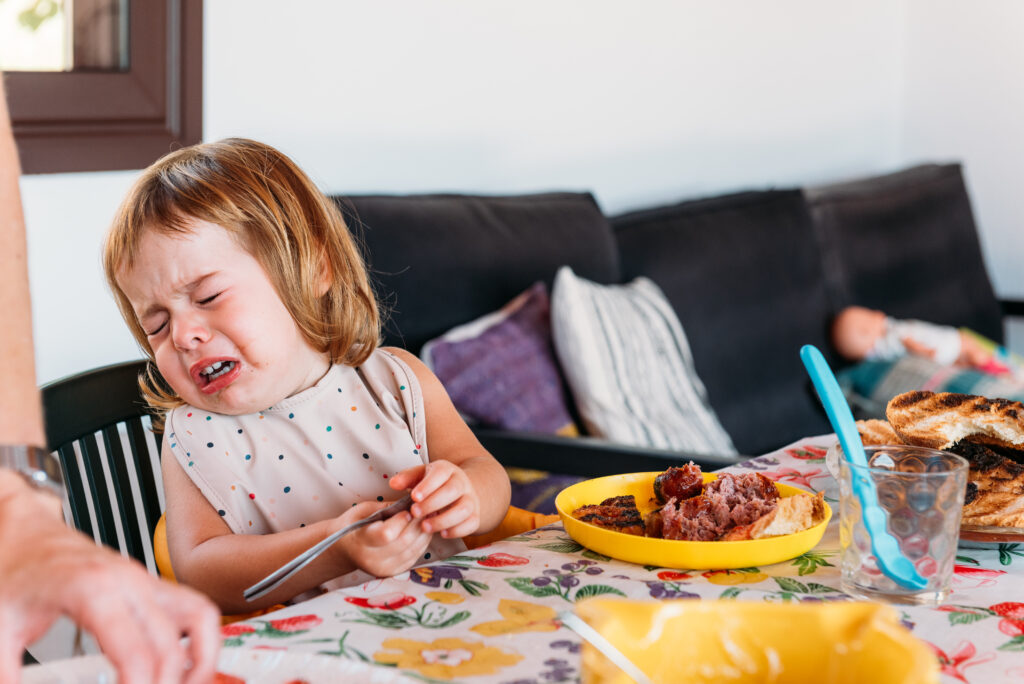
Starts Crying
Pushes food away.
More Crying
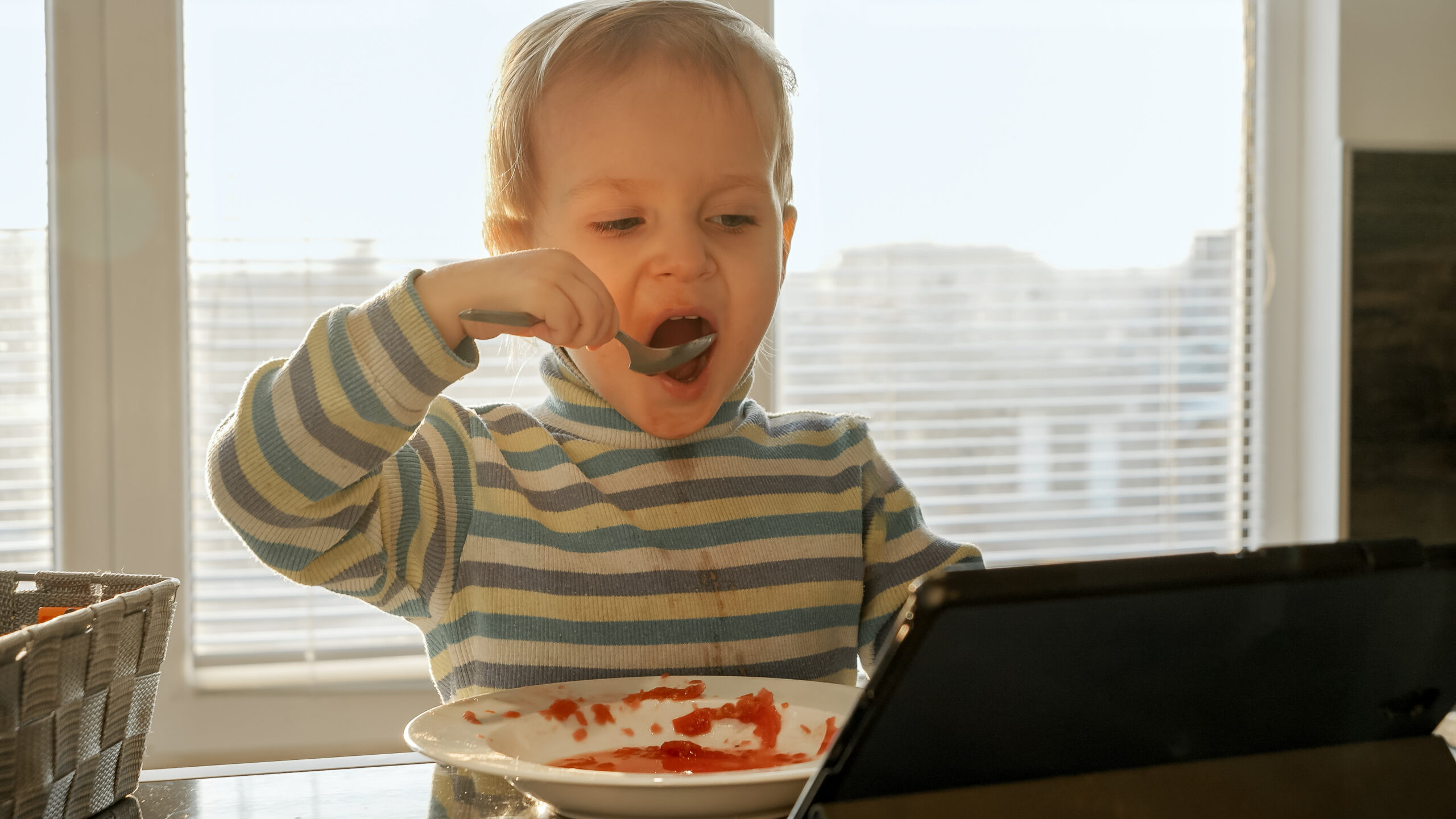
You hand over the mobile.
10 minutes later, the plate is empty.
If a script similar to this takes place in your home almost every day. Then you’re far from alone. And it doesn’t mean you’ve created a “bad habit” for your child; it totally means something else. Keep reading to get to the bottom on how to break the habit without a meltdown at every meal.
Why Your Toddler Won’t Eat Without a Screen (It’s Not a Parenting Failure)
If you’re wondering why I created this “bad habit,”, don’t worry, you’re not the only one thinking like this. Handing over a screen to your toddler while eating probably wasn’t a parenting choice; it may have been a survival strategy. Mostly the journey of screen time during a meal does not take place out of convenience; it takes place out of concern.
You didn’t reach for a screen because it was an ideal decision at the moment, you reached out because that was the only option that seemed to work at that moment.
Every parent must have reached a point where the only priority for them was to put some food into their child’s mouth. After trying for more than 10 times, a screen seems to feel like the only option standing between the food and your toddler’s stomach. It’s very easy to judge these moments in hindsight; it’s much harder when you’re actually living them.
Toddlers aren’t designed to sit still for long periods, and that’s a sign of healthy development, not poor behavior. At this age, a child’s brain is wired to explore, move & respond to whatever is most engaging to them. Their will and ability to focus on specifically one task, such as something slow-paced like eating, are still developing. What naturally feels like defiance is usually a short attention span, growing independence, and normal toddler development.
Why the Screen-at-Mealtime Habit Gets Harder to Break Over Time
What began as a temporary solution gradually became an expectation. You may notice the requests become more immediate with time; they start asking “mobile?” or “TV?” even before the plate reaches the table. The screen doesn’t feel like a distraction; it starts feeling like a part of the routine. When two things start taking place together over and over, the brain starts linking them together. Instead of just thinking that it’s lunchtime, the brain thinks food means screen time.
That is why the removal of screentime feels harder, you’re not just removing the screen, you’re changing a routine your toddler has started expecting. Without noticing the familiar cue, meal times start feeling different, due to which toddlers respond to it by resisting, protesting, and avoiding the meal.
By the way, the good news is that habits are not permanent and can be changed. They were built through repetition over time and can be reframed through repetitions.
How to Break the Toddler Screen-at-Mealtime Habit (Without a Fight)
The aim isn’t one dramatic battle, it is to work on a routine that your toddler can adjust to over time. Take it as replacing one habit with another, not as breaking your child’s will power.
Make the screen less important before removing it.
The main aim shouldn’t be to reach from 100 to 0 in a day, no screens from tomorrow. This often creates resistance. Instead, encourage them to weaken their association. Things to work on:
- Starting the meal and then providing them the screen after some moments.
- Screen time lasts 10 minutes less than yesterday.
- Pause the screen briefly while they’re eating.
Small changes are often more adaptable and create less dramatic situations as toddlers have more time to adapt.
Replace what the screen is doing.
Instead of thinking about how to remove the screen, start thinking: What job is the screen doing?
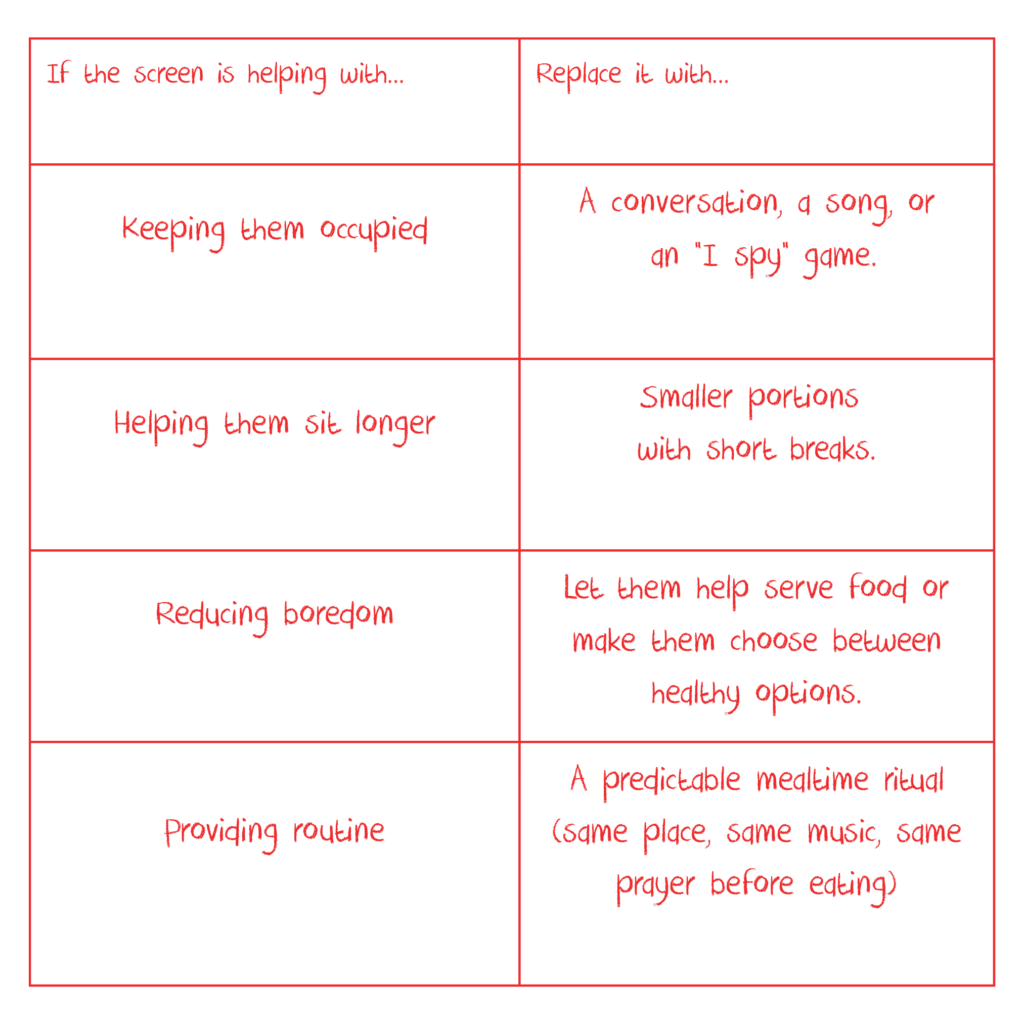
Start practicing with one meal.
Start with picking one meal, the one that usually feels least stressful. Start by winning that meal; once it becomes part of the routine, then move towards another meal. Success at one meal helps in building the confidence to work on another.
Consistency always matters more than perfection.
How to handle the meltdown
If your toddler starts protesting or resisting when the screen is not there, it doesn’t mean you’ve made a wrong decision, it means there is a change in routine, different from what your toddler was expecting.
Your job in those first few meals isn’t to stop every tear; it is to remain calm enough so that your child can borrow some calmness from you.
Instead of long conversations, here are a few phrases that can help you along the process:
- “I know you were expecting the screen.”
- “It’s okay to feel upset.”
- “Today we’re eating together.”
- “You don’t have to eat right away. We’ll sit together for a little while.”
- “When you’re ready, your food will be here.”
The first few mealtimes after the beginning of transition may feel the hardest, but your child will learn gradually with repetitions. The more calm & consistent you’re with the new routine, the more familiar it’ll feel.
With some patience, calmness, consistency, and manageable changes, your toddler can learn to enjoy their meals without the need of a screen and you can gradually start reclaiming mealtimes as a moment of connection and bonding.
If you’d like to understand more on why toddlers react the way they do when the screens are taken away, you may also find Why your child screams when you take the tablet and what that’s really telling you helpful. And if you’re someone who is curious about what other challenging behaviors your toddler might be communicating, Why does my toddler hit, bite, or push other kids?
Explore why these behaviors are often a form of communication rather than “bad behavior.”
Thank you for giving this a read. We’ll see you in the next one.